
The culture cocoa, an ancient art that merges with modern science, represents an activity both fascinating and rewarding. Cocoa (Theobroma cacao), a crop tropical essential, you experience a global demand is constantly rising. In effect, its use extends beyond the manufacturing of chocolate to include applications in cosmetics, pharmaceutical and other industries. Although the process may seem complex, with the information and the proper techniques, it is possible to achieve a successful harvest and, what is more important, sustainable.
Below we will explore the best practices for the cultivation of cocoa sequentially, from land preparation to harvest and post-harvest. In addition, we will address crucial issues such as the selection of varieties, the integrated pest management and disease, and of course, the importance of sustainability.
Selection and Preparation of the Ground: The Starting Point
Index of the article
- 1 Selection and Preparation of the Ground: The Starting Point
- 2 Selection and Propagation of Varieties of Cacao: The Genetic Material
- 2.1 Planting and Management Nursery: The Cradle of the Plant
- 2.2 The Use of Grafts in the Cultivation of Cacao: Improving Performance
- 2.3 Transplantation and Crop Establishment in the Field: From Theory to Practice
- 2.4 The Pruning in the Cultivation of Cacao: Maintaining the Health and Productivity
- 2.5 Integrated Management of Pest and Diseases: Care is Prevention
- 3 Harvest and Post-Harvest: The Key Process of the Taste
- 4 Cocoa processing: The Final Transformation
- 5 The World Day of Chocolate and the Challenges of Culture
- 6 Economic and Environmental challenges: The Volatility Prices and the Shadow of The Deforestation
The initial phase and more crucial in the cultivation of cocoa is the selection of the ground. The cocoa grows best in tropical climates with average temperatures ranging between 21 °C and 32 °C. it Also requires an annual rainfall of 1,500 to 2,500 mm, evenly distributed throughout the year. Therefore, the ideal soil should be deep, with good drainage and a high concentration of organic matterwhile maintaining a pH between 5.0 and 6.5. A soil type-clay, or franco-arenoso is preferable to prevent the ponding, a factor that can cause rot of the roots.
Once you have selected the field, the next step is the preparation of the soil. This involves the removal meticulous weed and vegetable waste, vegetable residues, followed by a leveling of the surface. In this sense, the use of green manures or the incorporation of organic matter is a practice that is highly recommended to improve the structure and fertility of the soil.
Selection and Propagation of Varieties of Cacao: The Genetic Material
There are three main groups of cocoa, each with distinctive characteristics: Criollo, Forastero and Trinitario.
The Criollo cocoa it is appreciated for its delicate flavor and aromatic, however, their lower productivity and high susceptibility to diseases, make them more vulnerable. In contrast, the Forastero cocoa it is more robust, productive and resilient, which is why it accounts for the largest share of global production. Finally, the Trinitario is a hybrid natural that combines the robustness of the Stranger with the quality of taste of the Creole.
The choice of the variety is a strategic decision that depends directly on the objective of the producer (for example, specialty cacao vs. cocoa volume) and the specific conditions of the climate and the floor.
The production of cocoa it starts with the careful selection of the materials of propagation. For this reason, it is strongly recommended that the technical expertise. Even though many cultivars have a great genetic potential, do not always achieve the expected yields due to agronomic practices, deficient as the fertilization, pruning, or a stocking density inadequate.
Planting and Management in the Nursery: The Crib of the Plant
The planting should be done in nurseries to ensure the development of seedlings healthy and hearty before their transplantation to the final field. In effect, this method significantly increases the survival rate of young plants, and reduces the time required for their establishment. When the spread is sexual, using the seed, it is vital planted immediately after you remove it from the cob. To do so, the seed loses its feasibility in less than seven days, unless special treatments.
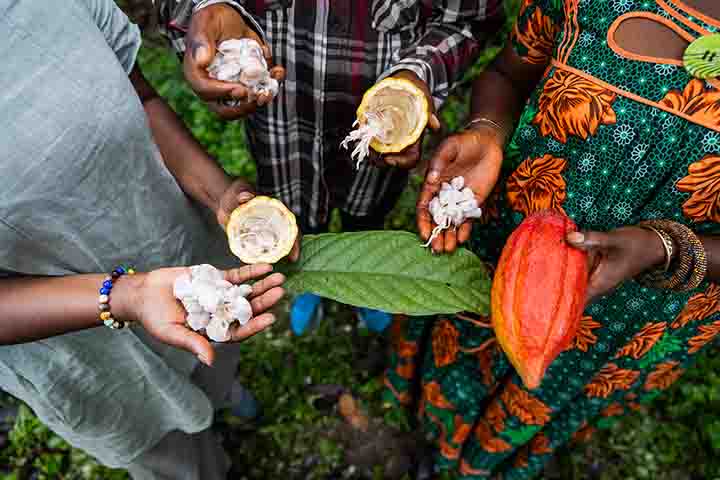
During the stage of the nursery, it is essential to maintain a strict control of pests and diseases, since the plant is extremely delicate. Sowing in the nursery should be planned for the seedlings to reach an optimal development in about five months, ideal time for transplanting to the field. The time of sowing in the nursery varies according to the region, always looking for foster the conditions of relative humidity and cool temperatures that requires the plant.
The seeds germinate in a period of 5 to 10 days, however, they may dry out and lose their viability quickly, if not watered properly. The seedlings need to be grown under 50 % shade, while maintaining a relative humidity over 80%, and an optimum temperature of 23 °C. In consequence, the seeds and seedlings remain in the nursery for about six months, and it is crucial that at this time they are exposed to conditions of light and humidity to simulate the most of the environment of the field planting.
The Use of Grafts in the Cultivation of Cacao: Improving Performance
Currently, the graft it is the way of propagation and most recommended, because it allows to implement various types of graft with successful results. The cocoa plant can be grafted in the form of a gusset, veneer side, or crown or stakes, with slight variations in the time required for the buds join.
Using the technique of grafting, the producers have the advantage of selecting plants more productive to use as a bowl on the floor pattern, which is, in general, better adapted to the area and shows a greater resistance to pests and diseases. In addition, the pattern often has a better ability to extract nutrients, resulting in increased production both in quantity and quality of the grain.
Transplantation and Establishment of the Crop in the Field: From Theory to Practice
The vast majority of the cultivars of cacao these are species that require specific conditions of light and shadow. Therefore, the transfer to the field is carried out in two stages: an initial, where we set out plants that will provide shade for the cocoa, and a second stage, where we transplanted seedlings of cocoa.
In the first stage, you have to set two types of plantations shadow simultaneously to protect the cocoa, considering the speed of growth of the species used:
- Temporary shade: use crops such as bananas, topocho or banana to protect the cocoa of the direct incidence of the sun during its early years.
- Permanent shade: set trees of great height, with good coverage, as the bucare, the saman or mahogany, among others.
Once the cocoa plants are transplanted, require constant care. A proper watering is vital, especially during dry periods. In addition, it is essential to control weeds in order to avoid competition for nutrients and water. However, the use of herbicides should be limited, opting for manual methods or the use of vegetation to maintain the health of the soil and the ecosystem.
In terms of the densities of sowing, the plants are taken to the field with a separation that varies according to the cultivar, the topography and the provision of the shadow. However, it is common that are established at distances of 3 meters in three rolls or 3 x 3 metres in rows as a minimum.
Pruning in the Cultivation of Cacao: Maintaining the Health and Productivity
Pruning is an agricultural practice, essential in the cocoa plantation, as it contributes to several important factors. You can perform two types of pruning:
- Pruning training: takes place as the tree grows, giving you an architecture that allows the entrance of light.
- Pruning cup: once the plant enters the production phase, it gives you a way to avoid an excessive growth in height, facilitating the harvest. In consequence, this pruning is critical to prevent the loss of ripe fruit that otherwise would be inaccessible.
Integrated management of Pests and Diseases: Care is Prevention
The integrated management of pests and diseases is a crucial aspect for the sustainability of the crop. Fungal diseases such as moniliasis (Moniliophthora roreri), and the witches broom (Moniliophthora pernicious) are the most destructive. Therefore, to prevent its spread, it is essential to perform pruning health and regular use resistant varieties.
Even so, the cultivation of cocoa facing significant threats. The moniliasis and the witch's broom can cause losses of up to 90 % of the production. In the same way, other pests such as the bit of cocoa and bed bugs seriously affect the quality and the performance.
The climate change further aggravating the situation. The variability in temperatures and rainfall patterns may increase the incidence of pests and diseases. In fact, the excess or lack of water harm directly the development of the crop.
Harvest and Post-Harvest: The Key Process of the Taste
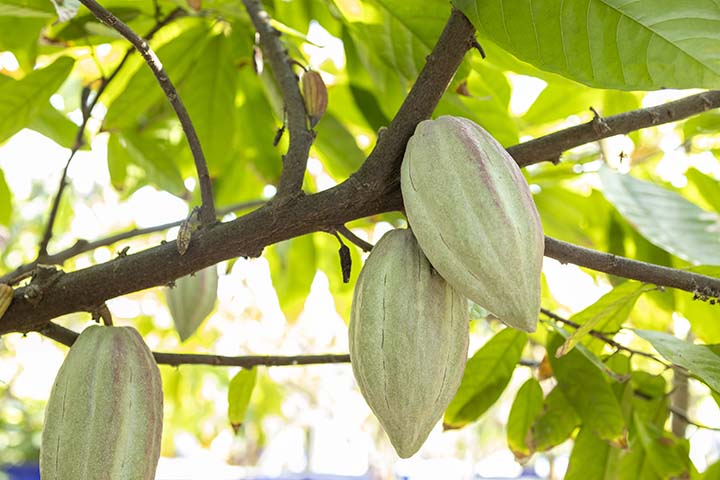
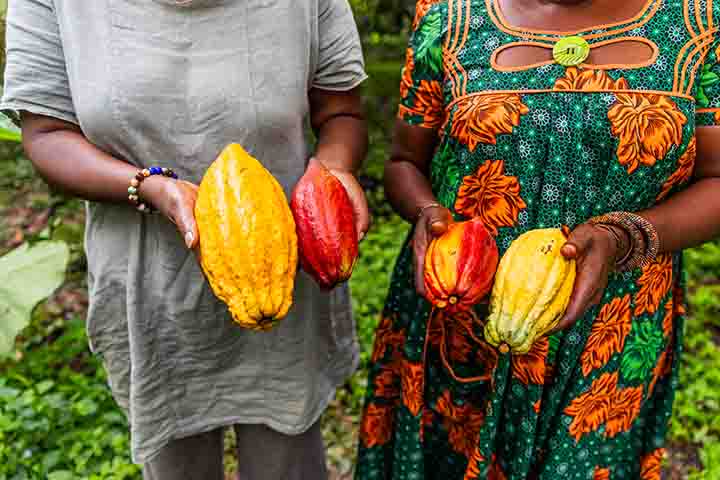
The harvest cocoa it is a manual process that requires experience to determine the optimal time of maturity from the cobs. Generally, a cob of ripe changes color, going from green to yellow, red, or purple. Consequently, the crop must be performed with care to not damage the bearings floral, which could affect future production.
Once harvested, the ears are laid in heaps to open and extract the beans, which are then carried to the processes of fermentation and drying.
The fermentation, which lasts between 5 and 7 days, it is a process microbiological which sugars pulp become acetic acid and alcohol, generating heat. Therefore, this process is fundamental to the development of the tastes and aromas of the chocolate.
Then, the fermented grains are spread in the sun or in dryers mechanics until its moisture content is reduced to 7-8 %. In this way, we obtain the dried grains and ready for marketing.
Cocoa processing: The Final Transformation
The cocoa processing ranging from traditional methods to industrial processes on a large scale.
- Craft: it is usually a work family that consists of the bean is roasted in a wood-burning fire pit, descascarillarlo hand and grind it to obtain a thick paste. Subsequently, we add sugar, milk or candied fruits before you cool it off for it to solidify.
- Semi-industrialised: In this process, the grain is classified by size, and roasted on a sheet of gas. Then, descascarilla, and cleans up in a threshing machine mechanics. The grain clean is passed by mills to a fine paste.
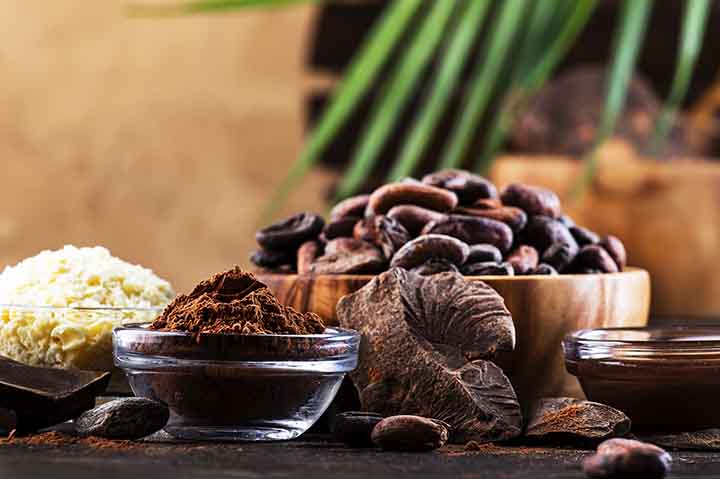
- Industrial: Here, the grain is processed in two phases: the first to obtain semi-finished products such as cocoa butter, cocoa liquor and cocoa powder, and the second to make finished products such as chocolates and drinks.
The World Day of Chocolate and the Challenges of Culture
The cocoa it is not only a culture, but a fundamental pillar in the global culture, and its importance is celebrated on specific dates. In many countries it is recognized on the 13th of September as the International Day of the Chocolate. This is perhaps the far more recognized worldwide. Its origin dates back to 1995 in France, and is linked to two key figures in the history of chocolate:
- Roald Dahl: The famous british writer, author of the iconic novel “Charlie and the Chocolate Factory”, was born on this date. His work has fed the imagination and the love for the chocolate in generations of readers.
- Milton S. Hershey: the birth of The visionary confectioner american, founder of the famous company Hershey's, is also commemorated on this day. His work was fundamental to democratize the consumption of chocolate, making it accessible to a mass audience.
On July 7, it is also celebrated as the World Day of Chocolate and is driven by the International Cocoa Organization (ICCO). It is believed that commemorates the arrival of the chocolate back to Europe, specifically Spain, in 1550, after its discovery by the Spanish conquistadors.
Both dates invite us to reflect on the profound impact of this product, honoring not only its origin in America and its global expansion, but also the tireless work of the farmers who grow it. This is a crucial time to raise awareness about the importance of fair trade and sustainable production, ensuring that the benefits go directly to the communities that make it all possible.
Despite its cultural significance and its increasing demand, the cultivation of cocoa is facing significant challenges that threaten its long-term sustainability.
Economic and Environmental challenges: The Volatility of Prices and the Shadow of The Deforestation
The volatility of the cocoa prices in the international markets represents one of the major disadvantages for farmers. Often, the prices are so low that not even cover the costs of production, which can trap communities in a cycle of poverty. This economic instability makes it difficult to investment in modern agricultural techniques and sustainable, perpetuating a fragile system.
One of the most serious environmental problems associated with the cultivation of cocoa is deforestation. To expand the areas of planting, cutting down vast tracts of forest, which leads to the irreversible loss of biodiversity and the deterioration of the soil. Although there are models of agriculture more sustainable, such as agroforestry systems that integrate the cocoa, with other trees, the monoculture intensive remains a common practice, with serious consequences for the ecosystem.
For more information, we invite you to read our article Cocoa farming: Biorregeneración of the Soil for Future Fertile.
If you liked this article, share it on your social networks or visit us at our Youtube channel @AgrotendenciaTV. Leave us your comments.
Editorial team Agrotendencia